01
Fishing Technology
Fishing systems and methods; gear types and their application; matching gear to target species and conditions; efficiency and selectivity.
The vocational function is the Institute’s delivery mechanism into the sector, and its listening post. Instructors working with fishermen learn what the real constraints are.
Fishing systems and methods; gear types and their application; matching gear to target species and conditions; efficiency and selectivity.
Practical operation of fishing methods; shooting, setting and hauling; handling of catch on board; techniques new to the area.
Chilling, freezing, drying, salting and smoking; process control; product quality and shelf life.
Handling from capture to first sale; hygiene; icing and temperature control; damage avoidance; landing practice.
Net construction, mending, rigging and maintenance; materials, twines and knots; repair of damage at sea and ashore.
Safety at sea; personal survival technique; life-saving appliances; emergency procedures; distress signalling; first aid at sea.
Hull maintenance and repair; materials; fitting-out; routine and preventive maintenance of small fishing craft.
Outboard and inboard engine operation, servicing, fault diagnosis and repair; fuel systems; preventive maintenance.
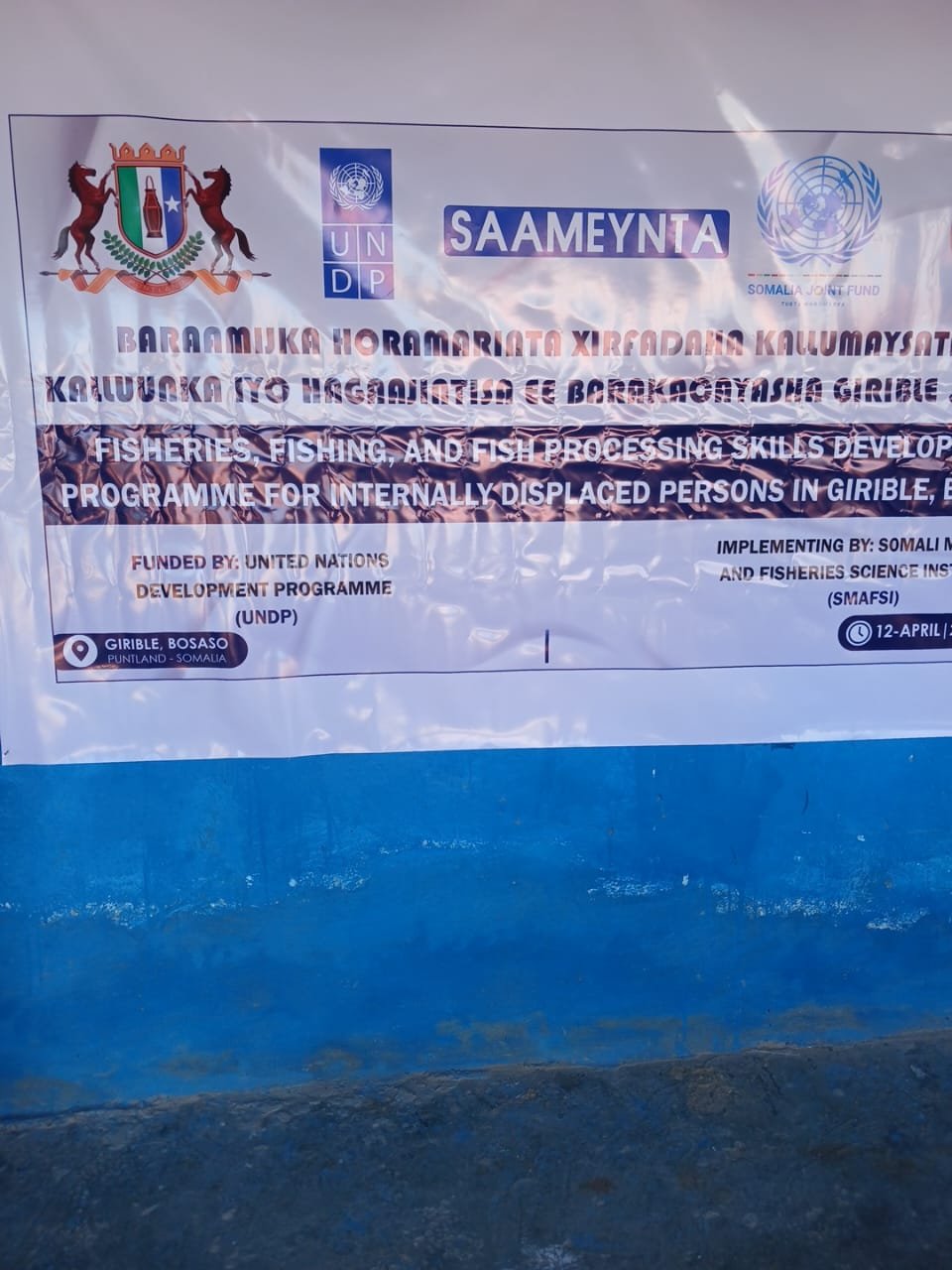
Working Fishermen Professional Development Programme — structured around the fishing calendar.
Structured around the fishing calendar, not the academic one. Eleven vocational cohorts have graduated, including dedicated programmes for women and for internally displaced persons in Girible, Bosaso.
Outside fishing hours, no lost working day.
Concentrated in monsoon slack periods.
Instructors travel to isolated fishing centres.
Personal survival techniques · Basic firefighting · Advanced fish inspection and quality assurance · Extension and information services · Shipping and cargo handling · Port management · Clearing and forwarding
Enquire about a course